Trabalho e viagem
 Carry-On Luggage on Airplanes: Sizes, Rules, and What You Can Bring
What can you take in your carry-on when you fly? Here we explain standard sizes, rules, and permitted items.

Sofia Santos 2/5/2026

Renting a car has become a practical option for people traveling for business, tourism, or simply looking for a road-trip adventure. However, not all companies authorize border crossings by car—and when they do, several conditions apply.
Plus, rules and restrictions can change depending on the country, the company, and even the vehicle model. So if you plan to rent a car and cross a border, we suggest you read this post first.
A cross-border trip in a rental car is when you rent a vehicle in one country and use it to cross an international border. For example, when someone goes shopping in the USA to bring goods back to Mexico and rents a car.
Here are some common country/region examples of cross-border car travel:
USA → Mexico
Mexico → USA
USA → Canada
Between European Union countries
Crossings within Latin America (where permitted by the company and the country)
But it’s not as simple as driving from one place to another—you must do it legally. There are rules, conditions, and insurance requirements that aren’t the same across all countries or companies.
Cross-border car rental is quite common, and there are several companies where you can rent a car and travel to another country, for example:
Company | Mexico → USA | USA → Canada | USA → Mexico |
Enterprise | Only from specific cities/branches. Possible restrictions by vehicle class. | Usually permitted from many locations, but you must notify them when booking/pickup. | Requires renting within Mexico and purchasing mandatory/local insurance. |
Avis | Only if the car is rented in Ciudad Juárez, Chihuahua, Hermosillo, Mexicali, or Tijuana. | Usually allowed from many locations, but you must inform them at the time of reservation/pickup. | Possible, with specific conditions. |
Budget | In some cases | In certain cases | With specific restrictions (e.g., having a corporate account). |
Hertz | With prior authorization and specific coverage (varies by office). | Possible, but there may be restrictions by vehicle type. | Often restrictive. |
Alamo | On specific routes/cities (varies by branch). | Usually permitted in many cases (policy depends on rental location). | It depends; many policies restrict or do not allow it. |
In Europe, for example:
Sixt or Europcar. They generally allow crossings between European countries (with restrictions by country/vehicle).
Everything depends on the country where you rent, the branch, the car category, the required insurance, and the company’s prior authorization. The same goes for borders within Latin America.
Some requirements for renting a car and crossing borders are the same, but they vary depending on the company, the country where you rent, and the destination. That's why it's so important to confirm the exact policy before planning your schedule of activities and setting off on your trip.
These are the requirements for driving a rental car in another country:
Company authorization. If you don’t have authorization from the rental company, you could be left without insurance and face issues at the border. Ideally, get the permission in writing in your contract or reservation notes.
Mandatory insurance. In many cases you’ll need specific coverage for the destination country—for example, a local insurance policy or a cross-border extension.
Valid ID. Carry your Mexican passport or another valid official ID. Some branches may ask for more than one ID, depending on the country and counter policy.
Valid driver’s license. A valid license may be enough, but some destinations could require an International Driving Permit (IDP) or additional credentials.
Notify the trip when booking. Inform them from the start that you plan to cross the border. If you mention it at the end, they might deny permission or not have time to arrange the required documents and insurance.
Extra fees or charges. Cross-border rentals may include additional costs, such as a permit fee or a border-crossing surcharge.
These requirements are general; exact conditions can change by rental company, branch, route, destination country, and vehicle type.
Insurance can determine whether you’re authorized to cross—and whether you’re covered in case of an accident or theft.
While the list can vary by company, here’s a table with the most common coverages for cross-border trips:
Insurance / Coverage | What It’s For |
Mexico Insurance | Coverage required to drive in Mexico |
Liability / TPL | Third-party damage |
CDW/LDW | Damage to the rented vehicle |
Theft / TP | Theft of the vehicle |
Roadside Assistance | Towing and breakdown assistance |
International Medical Insurance | Medical care for the traveler |
Tip: before you go, confirm in writing in your contract which countries each coverage applies to and whether there are deductibles or exclusions.
Rules for crossing borders in a rental car are usually stricter than for standard rentals. It helps to be aware of at least the basics:
Vehicle return. You generally can’t return the car in the destination country—you must return it to the country (or branch) of origin.
Vehicle types. Some companies don’t authorize crossings with certain classes, e.g., luxury SUVs, sports cars, premium vehicles, large vans, or specialty categories.
Prohibited routes or zones. Certain roads or regions may be outside the contract’s permitted territory.
Europe. There may be limitations when entering countries outside Schengen, even if you rent within the EU.
These restrictions are found in the rental company’s terms and FAQs. You can also confirm them directly with the branch.
Crossing borders is an adventure that many people want to experience, but it's not that simple. If you're not aware of the requirements and restrictions, you may encounter problems when crossing the border with a rental car.
Here are some common mistakes people make when renting a car to cross the border:
Assuming that “if I can drive, I can cross the border.”
Not notifying the company when making a reservation.
Relying on credit card insurance without checking international coverage.
Attempting to return the car in another country without authorization.
Para evitar caer en los mimos errores, debes ser precavido, por eso te dejamos algunos tips…
Renting a car and traveling to another country requires more attention to detail than a standard trip, so we recommend:
Book directly with the company and notify them in advance. Don’t wait until the last minute—ask them to validate the crossing in the reservation so the pickup day doesn’t bring surprises.
Check for fees for border crossing, permits, mandatory insurance, or a higher deposit so the total doesn’t change at pickup.
Carry a printed copy of the contract and insurance, plus another copy on your phone (PDF).
Confirm your GPS works outside the rental country and that roadside assistance is also valid across the border (or what its limits are).
Review the traffic rules at your destination, including speed limits, tolls, and basic driving requirements to avoid fines or mishaps.
Use AI tools to save time reviewing policies, translating instructions, and organizing your documents before departure.
Make creative presentations about your route (map, stops, etc.) to visualize times, tolls, and documents before crossing.
Keep these tips in mind for a trip with fewer surprises, fewer unexpected costs, and more clarity.
The following routes are good references to identify common crossings and understand the type of journey:
USA ↔ Canada routes (Seattle ↔ Vancouver, Detroit ↔ Toronto, New York ↔ Montreal).
Within Europe (Copenhagen → Malmö, Vienna → Budapest, Madrid → Lisbon, Nice → Monaco, Barcelona → Andorra la Vella).
USA → Mexico (San Diego/Los Angeles → Tijuana/Ensenada).
These routes are only examples of common crossings. Whether you can do them in a rental car depends on the rental company, the branch, the car model, and the insurance/permit required to cross the border.
Renting a car is a practical option for tourists, couples, families, or digital nomads. You just need to prepare the tools you’ll need ahead of time to keep working on the road.
However, each company has different rules, so don’t assume crossing is always allowed. The best approach is to plan ahead: review your rental company’s policies and confirm permissions, insurance, and return conditions in advance to avoid issues at the border.
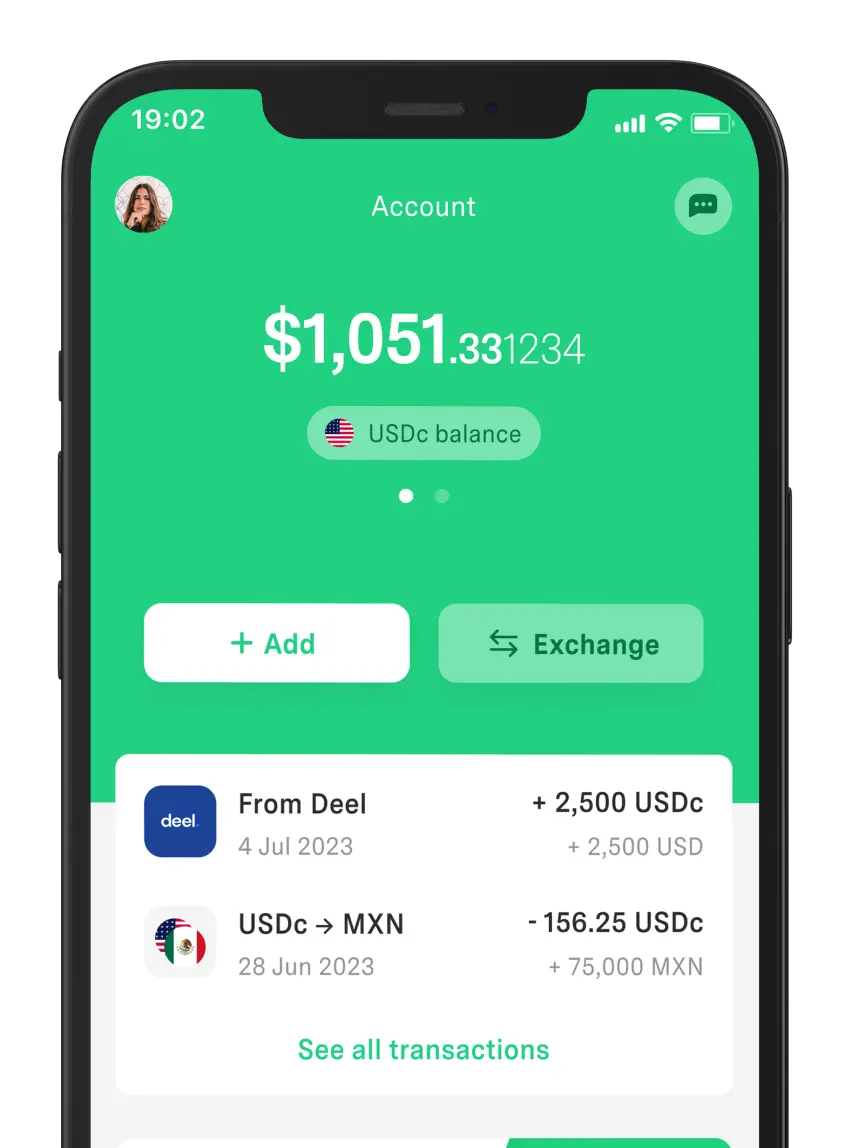
Fortunately, you don’t have to worry about managing international expenses if you use DolarApp. It’s an ideal solution for operating in dollars or digital dollars without complications.
Activate your digital account and request your international card to pay in USDc or EURc without worrying about high conversion fees. You can also exchange your balance from one currency to another at a fair rate.
It depends on the company and the branch. In most cases it’s not allowed, and when it is, it usually requires prior permission or mandatory Mexican insurance.
Generally, you need the coverage required by the rental company for the destination country, and it must be valid in your contract. If you’re going from the USA to Mexico, for example, you must have valid Mexican insurance.
No. One of the typical rules for cross-border rentals is that you can’t return the car in the destination country. Most commonly, you return it where you rented it (or even the same city/branch).
It depends on the company, but some common restrictions include large SUVs (or armored), vans, luxury cars, sports/exotics. Reasons include insurance restrictions and theft risk.
There’s no single rate. The cost varies by rental company, route, country, and vehicle model. It may include a daily charge, a crossing fee, or a coverage extension.
Sources:

Os países têm fronteiras. Suas finanças, não mais.
Trabalho e viagem What can you take in your carry-on when you fly? Here we explain standard sizes, rules, and permitted items.
 Trabalho e viagem
 Find out the requirements for traveling to Europe in 2026 from Mexico, in addition to your passport and other documents.
 Trabalho e viagem
 Not sure what to do in New York? Here’s a list of must-see places based on your interests, free options, and some tips.