The United States offers quality education, multicultural experiences, and better professional opportunities. But while many dream of studying in the U.S., starting this journey is not that simple.
In addition to choosing a university, there are several requirements to study in the U.S. as a foreign student. That’s what this post is all about, including practical tips to help you adapt to this new environment.
Studying in the U.S. as a Foreign Student: Requirements and Tips
What Are the Requirements to Study in the United States as a Foreigner?
The U.S. attracts more international students than almost any other country. However, joining its educational system involves meeting academic, immigration, and personal requirements.
Are you ready to do everything it takes to make that dream come true?
Don’t begin your application before reviewing these key requirements:
1. Be admitted to an authorized institution
The first step is to choose the type of program you want to pursue (university, technical, language, etc.) and apply.
What matters is that the university, college, or school is certified by the U.S. government to admit international students.
Once accepted by an educational institution, you’ll need to obtain a visa that legally allows you to enter the country as a student. Generally, this will be an F or M visa, depending on your study level.
This visa is required to study full-time and allows you to enroll in academic, technical, or language programs.
3. Prove English proficiency
To be accepted by an American institution, you must demonstrate a sufficient level of English, especially for university-level studies. While some schools offer courses, formal academic programs usually require certificates from exams like:
TOEFL (recommended minimum score: 80-100)
IELTS (minimum: 6.0-7.0)
If you don't yet meet the level, you can start with a language course in the U.S.—though this still requires a student visa.
4. Provide proof of financial resources
The U.S. requires foreign students to prove they have enough funds to cover their expenses, including tuition, housing, health insurance, and living costs.
To prove this, you can submit:
Bank statements
Sponsorship letters
Proof of scholarships or financial aid offers
5. Prepare and translate your academic records
Depending on your intended level of study, you’ll need to submit transcripts, high school diplomas, or university degrees. These must be officially translated into English by a certified translator.
Some institutions may also require a motivation letter, academic recommendations, and a minimum SAT score.
6. Have a valid passport and proof of residence in your home country
You need a valid passport with at least six months more validity than the expected length of your program. You must also prove you reside in your home country and that your main intention is academic, not migratory.
7. Purchase international health insurance
The U.S. healthcare system is private and expensive. That’s why most universities require international students to have medical insurance.
Some institutions offer their own plans. If not, you’ll need to purchase one on your own.
Student Visa: What It Is, How to Apply, and How Much It Costs
There are several types of visas for entering the United States, one of which is the student visa. This document authorizes foreigners to enter and stay in the country solely for the purpose of studying.
The student visa does not allow you to work freely or stay in the U.S. indefinitely. It is tied to your full-time student status and your educational program.
Now, let’s talk about the requirements for a student visa in the U.S.:
Most international students apply for one of these three:
F-1 Visa: for academic studies at universities, colleges, institutes, or language schools.
M-1 Visa: for vocational or technical programs.
J-1 Visa: for educational exchange programs like high school or professional internships.
If your program requires more than 18-19 hours per week, the most common is the F-1 visa. But this will depend on your specific course.
You will also need to fill out a form based on your situation:
Form I-20: If applying for an F-1 or M-1 visa.
Form DS-2019: If your program is an exchange and requires a J-1 visa.
How to apply?
The process is completed online and finalized with an in-person interview.
Basic steps include:
1. Complete the online nonimmigrant visa application, the DS-160 form.
2. Upload a photo that meets official requirements and save the confirmation page to present during your interview.
3. Pay the SEVIS fee, the Student and Exchange Visitor Information System fee.
5. Attend the interview with your passport, forms, payment receipts, and financial and academic documents.
How much does a U.S. student visa cost?
The DS-160 form (visa application fee) costs $185 USD. On top of that, you must pay the SEVIS fee, which is usually:
$350 USD for F-1/M visas
$220 USD for the J-1 visa (if applicable)
Both fees are mandatory and non-refundable, even if your application is denied.
Are There Scholarships to Study in the United States?
Yes, there are many scholarship options for foreign students in the U.S., though education costs can be high.
The good news is that if you’re traveling for study purposes, you may qualify for financial aid. This includes merit-based, need-based, or leadership scholarships.
Some institutions cover tuition, housing, and meals, while others also offer stipends and travel expenses.
Here are some standout options:
Tulane University offers merit- and need-based scholarships.
American University provides nearly full funding with the Emerging Global Leader program, aimed at future leaders.
Boston University offers scholarships for outstanding students.
Simmons University has programs for high-achieving students.
University of Miami funds talented undergraduates with strong records.
Tips for Foreign Students Who Want to Study in the U.S.
Studying abroad means adapting to a new environment, customs, and U.S. traditions. You'll meet people with different perspectives and face challenges outside your comfort zone.
Here are some tips that may help you adapt:
Build a support network
Sharing experiences with others helps reduce feelings of isolation. Try connecting with people in similar situations, cultural groups, or student clubs.
Practice English outside the classroom
Talk with classmates, join activities, and consume local content to improve your fluency naturally and quickly.
Be aware of cultural differences
The U.S. has a culture very different from many countries, especially Latin America. You’ll notice this in daily life.
So, observe, ask questions, and keep an open mind to ease your integration.
Maintain balance
It’s clear that studying is important, but so are rest, socializing, and caring for your mental and physical health. Though it may be difficult at first, try to find your own rhythm.
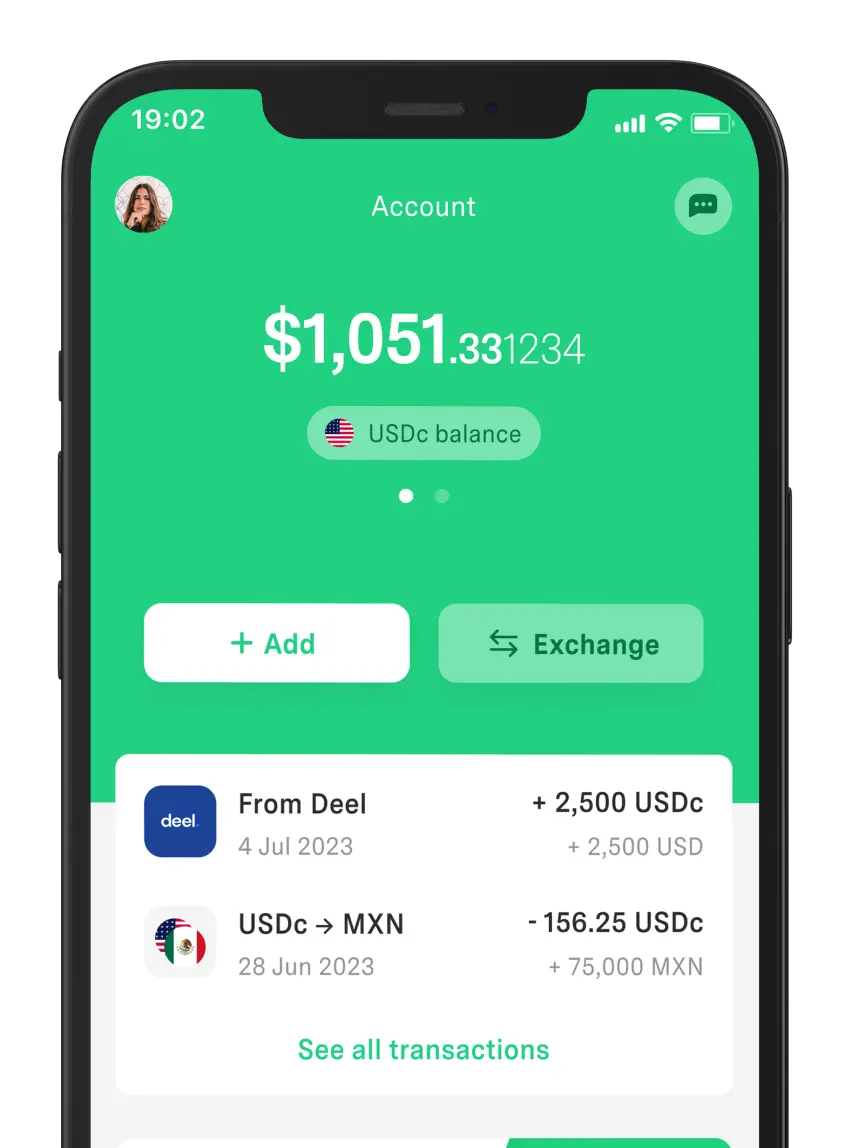
Finally, we recommend using DolarApp if you plan to travel to the U.S. and want to manage both dollars and pesos.
With our app, you can send money from the U.S. to Mexico by opening a digital dollar (USDc) account. It's a great alternative if you have family back home and want to support them financially.
Additionally, DolarApp also allows you to send digital currency to the U.S. quickly and easily. And if you link a local bank, you can buy or sell USDc at a fair exchange rate.
Descubra um mundo sem fronteiras.
Os países têm fronteiras. Suas finanças, não mais.


 Trabalho e viagem