Understanding what Big Data is and how it’s used has become essential for companies and organizations that want to make better decisions—especially in an era where we’re surrounded by data: every click, purchase, or transaction generates information that grows at high speed.
Big Data represents a new way of analyzing reality. In this post, you’ll discover what it is, its main characteristics, and what it’s for beyond technology.
What Is Big Data? Definition, Characteristics, and Examples
What Is Big Data?
Big Data refers to large volumes of data that cannot be properly managed or analyzed with traditional tools like Excel. It typically appears when a company accumulates thousands or millions of records (for example, users or purchases) and needs different approaches to make use of that information.
In other words, it’s too much information to handle manually.
Big Data Definition
In more technical terms, Big Data refers to massive datasets whose complexity requires specific methods for their management and analysis. These can be structured, semi-structured, or unstructured data and may come from multiple sources, such as social networks or activity logs.
The goal is to analyze them to extract patterns, trends, and relationships that support data-driven decision-making.
Big Data Characteristics
Big Data characteristics explain how data is generated, how it behaves, and why it matters when analyzing it.
These characteristics are known as the Vs of Big Data, which are:
Volume: the total amount of data generated and stored.
Velocity: the speed at which data is created, updated, and must be processed.
Variety: the coexistence of different data types and formats from multiple sources.
Veracity: the degree of quality and reliability of the information available.
Value: the benefit obtained by turning data into useful information for the business.
The five Vs of Big Data help differentiate it from other traditional datasets and clarify what’s needed to manage and analyze it effectively.
What Is Big Data Used For?
Big Data analysis is used to extract relevant information so organizations can better understand their environment and act with greater precision.
That’s why its applications range from decision-making to risk detection:
Decision-making. It turns data into useful information to decide more precisely and with less uncertainty.
Behavior prediction. It detects patterns to anticipate demand, preferences, customer churn, or risks.
Process optimization. It identifies inefficiencies and opportunities for improvement in operations.
Improved user experience. It helps detect what works and what doesn’t in products, services, or digital platforms.
Product and service personalization. It adapts offers, content, and recommendations based on user profile and behavior.
Fraud detection. It recognizes unusual activity and helps prevent suspicious actions.
Innovation and product development. It provides information to create new solutions based on real market data.
In addition, Big Data serves companies across multiple industries, marking the difference between merely storing information and using it to generate value. For this reason, it’s considered a strategic asset that powers initiatives like machine learning and Business Intelligence (BI).
Big Data Examples (Practical Cases)
Big Data in companies translates into real-world applications that improve efficiency, reduce risks, and deliver value across industries.
Here are some Big Data examples:
E-commerce (recommendations). Analyze clicks, searches, purchases, and time on page to suggest relevant products and improve conversion.
Finance (fraud detection). Big Data helps monitor transactions, locations, and unusual spending patterns. When it detects risks, it triggers alerts and preventive blocks.
Marketing (customer segmentation). It analyzes behavior, purchase history, contact channels, and reviews to automate analysis and build more precise audiences.
Transportation (routes and traffic). It combines GPS data, maps, and real-time events to optimize routes, improve arrival times, and avoid congestion.
Healthcare (record analysis). Big Data analysis is leveraged to process clinical information and medical records to detect relevant patterns. This helps identify risks and support diagnoses with greater context.
In general, Big Data is used across sectors to solve concrete problems and generate operational and strategic improvements.
Big Data vs. Traditional Data Analysis
Big Data and traditional data analysis seek the same thing: generating knowledge from data. The difference lies in the type of information they work with and the environment in which it’s produced.
With the digital revolution, data grew in volume and diversity. It also began to be generated continuously, making many approaches designed for limited, stable information insufficient.
Traditional data analysis, on the one hand, relies on more limited datasets that are generally structured and stable. Its focus is to measure, explain, and report what has already happened.
Big Data, on the other hand, works with data at scale—when information grows in volume, diversity, and generation pace. It focuses on detecting patterns, relationships, and opportunities that wouldn’t be visible with traditional methods.
When Is Big Data Needed?
When data is generated continuously, changes quickly, or comes from many sources and formats (apps, web, sensors, logs, text). Also when the goal is to anticipate behaviors, automate analysis, or scale information processing.
When Is It Not Necessary?
Traditional analysis is sufficient when data is manageable and well-structured. For example, if you work with periodic reports and clear questions without real-time urgency, there’s no need to apply Big Data.
In both approaches, data visualization is key to communicating findings. In traditional analysis, basic charts are often enough; in Big Data, dashboards and dynamic reports are common.
Conclusion
Big Data has become a key resource for data-driven decision-making and value creation, especially in digital environments. Its importance lies not only in the amount of information available but in the intelligent use of that information to transform it into useful knowledge.
But remember, it becomes necessary when data grows in volume, diversity, or speed. Otherwise, traditional data analysis may be sufficient.
It’s also worth noting that Big Data doesn’t replace other approaches—it complements them. When applied correctly, it enables better decisions and sustainable value creation.
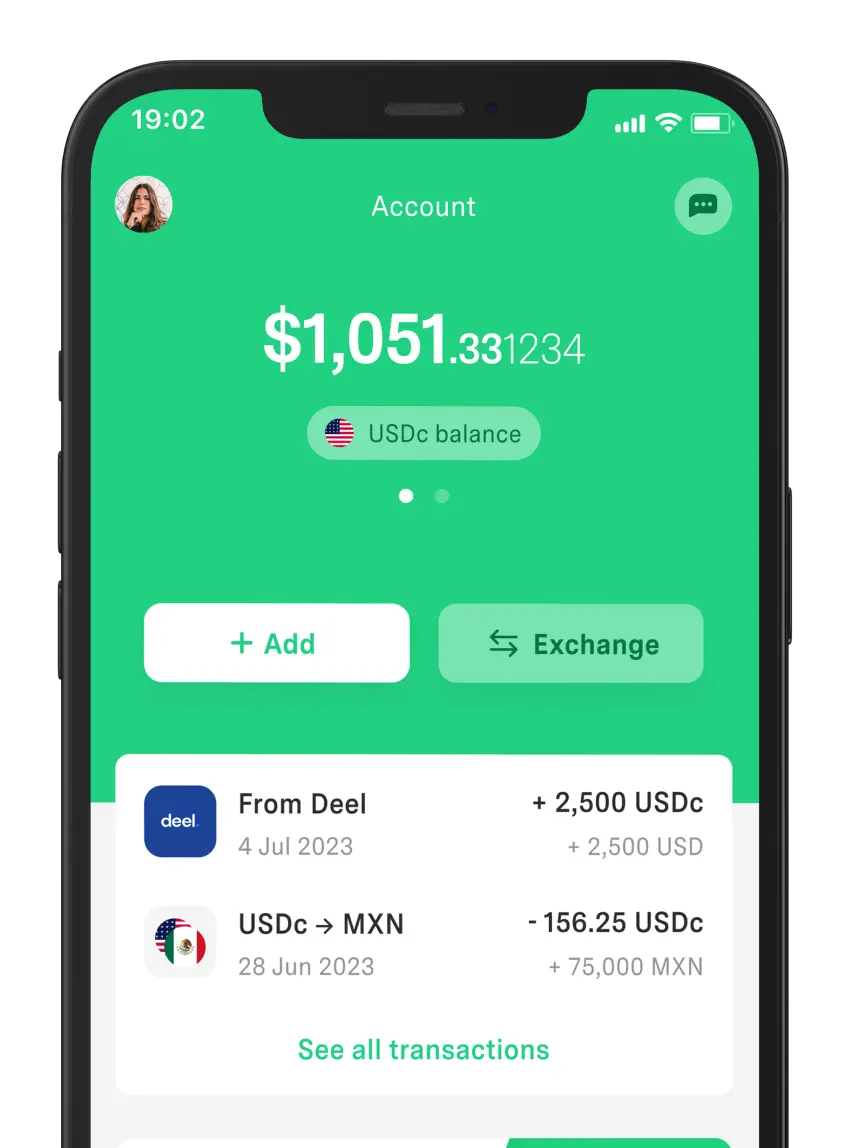
The intelligent use of data is also crucial for improving financial services. In this sense, DolarApp can be an ally for those seeking digital solutions and more efficient experiences.
One of the main benefits is that you don’t need to leave the country to send or receive international payments (in digital dollars or euros). From the app, you can easily create your digital account and exchange between currencies at a reasonable rate.
Frequently Asked Questions
Is Big Data only for large companies?
No. Although it started in large corporations, Big Data is now accessible to SMEs as well. In short, its adoption depends more on the volume and use of data than on company size.
What types of data are used in Big Data?
Structured, semi-structured, and unstructured data. These include, for example, records and transactions (structured), logs and JSON or XML files (semi-structured), and texts, images, reviews, or audio (unstructured).
Is Big Data the same as artificial intelligence?
No. Big Data focuses on managing and analyzing large volumes of data. Artificial intelligence, in contrast, uses those data to learn, predict, and automate decisions.
Do you need to program to use Big Data?
Not always. There are visual tools and analytics platforms that let you work with Big Data without programming. Of course, having technical knowledge expands possibilities and the level of analysis.


 Freelancer tips